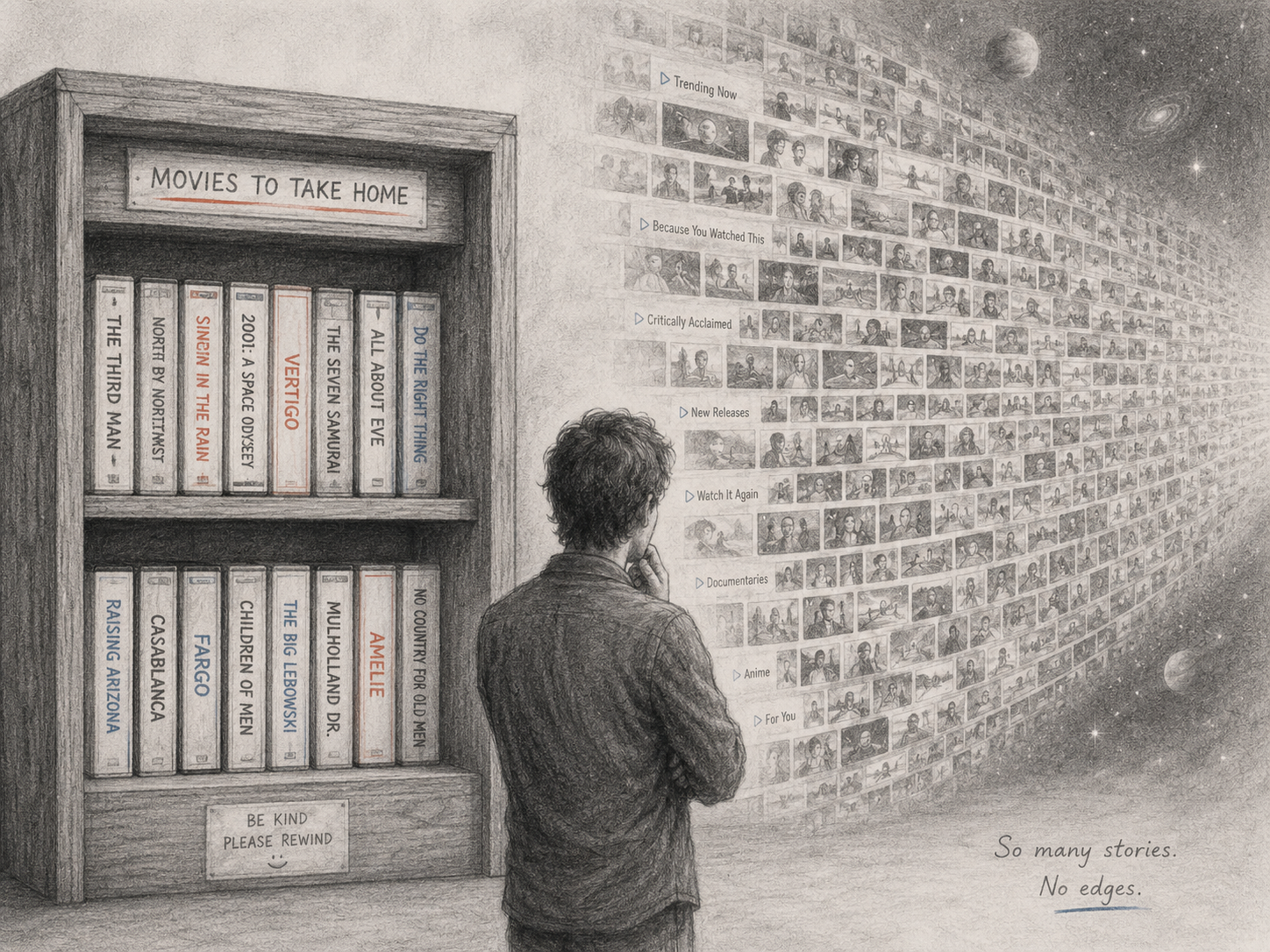
The Death of Friday Night Videos
Last week I spent twenty minutes scrolling Netflix.
Not watching Netflix.
Scrolling Netflix.
There were thousands of movies available. More than any video store could have held. More than I could watch in a lifetime.
And somehow I couldn't pick a movie.
One movie looked too heavy for a Friday night. Another looked like it had been assembled by a committee. One seemed like the kind of movie I should want to watch more than the kind I actually wanted to watch. A trailer started automatically, which made the movie feel less like a choice and more like a sales pitch.
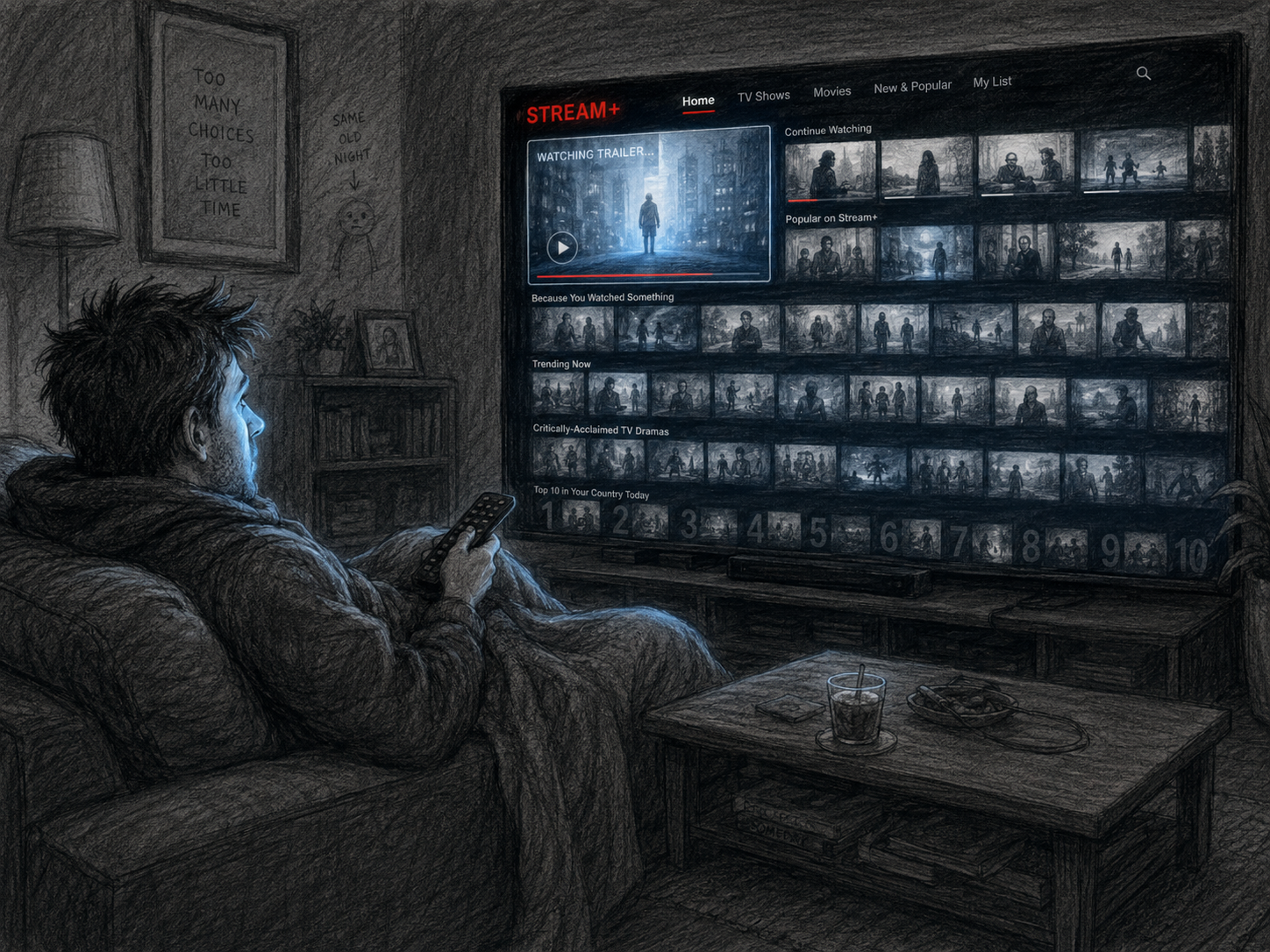
The menu kept offering.
I kept not deciding.
This is a ridiculous problem to have. The whole system is a practical miracle. No driving. No store hours. No late fees. No discovering that the movie you came for had already been taken by someone else who left the house fifteen minutes earlier.
Netflix is better than Blockbuster in almost every obvious way.
If this becomes an essay about how everything was better when you had to drive to a strip mall, it has already failed. A lot of the old friction was just annoying. Some of it kept people out if they didn't have a car, a store nearby, or a few dollars to risk on the wrong pick.
But I keep wondering why the worse system sometimes made choosing feel more deliberate.
The old version of Friday night had a clear beginning and end.
You had to decide to go.
That sounds small, but it changed the shape of the night. The night started before the opening scene. It started with someone saying, "What should we watch?" Then came the small negotiation about whether anyone felt like going out, and whether the store would still have anything good.
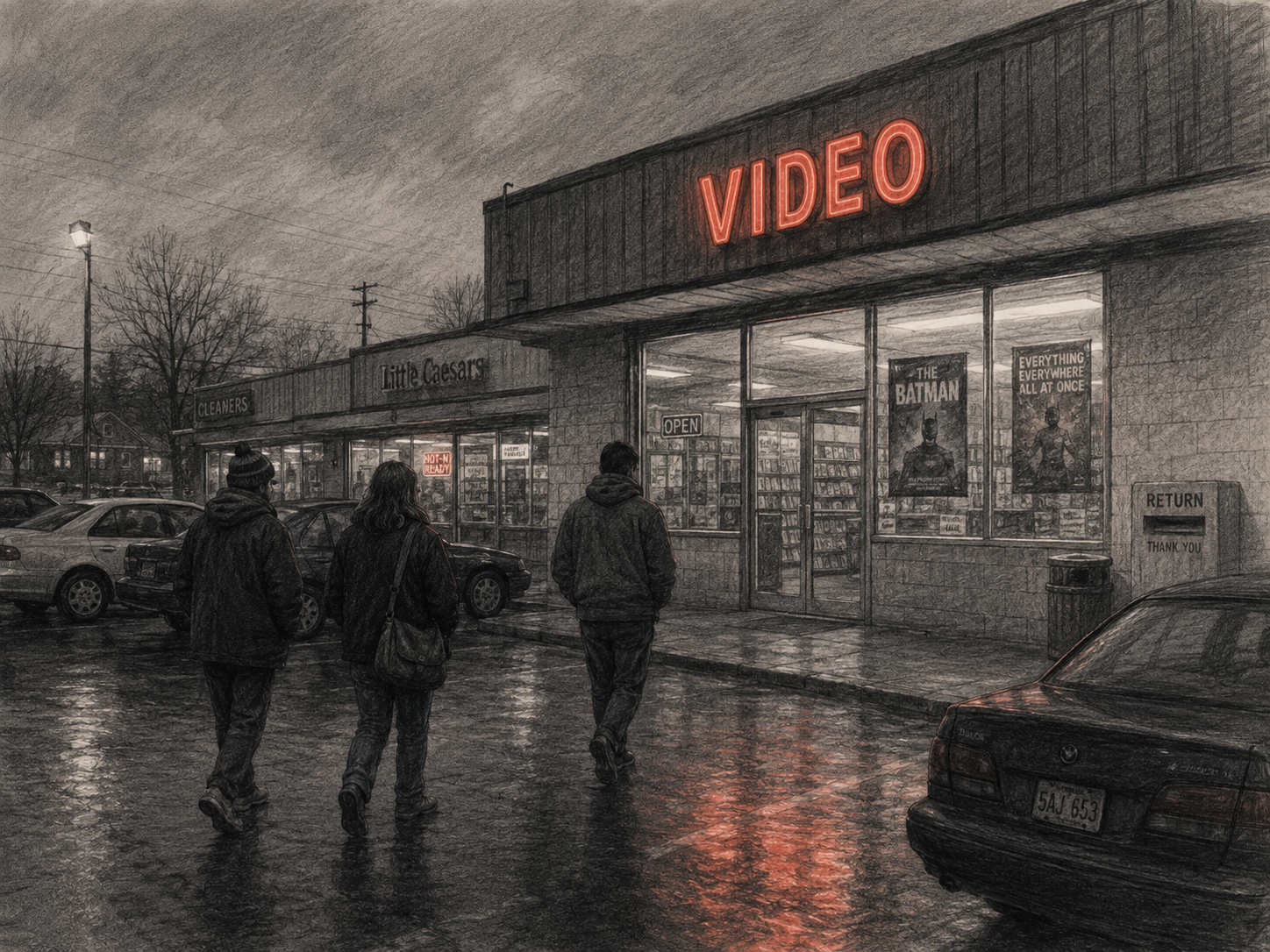
Then you left.
The trip didn't make the technology better—it just made the act of choosing visible.
At the store, there was a shelf. The shelf wasn't infinite. It had whatever it had. The new releases might be half gone. The one movie everyone had vaguely agreed on might be represented by an empty space.
There were aisles. Cases turned face-out. Covers that did a lot of work, sometimes badly. Movies you had never heard of. Movies someone insisted were good because a friend had said so.
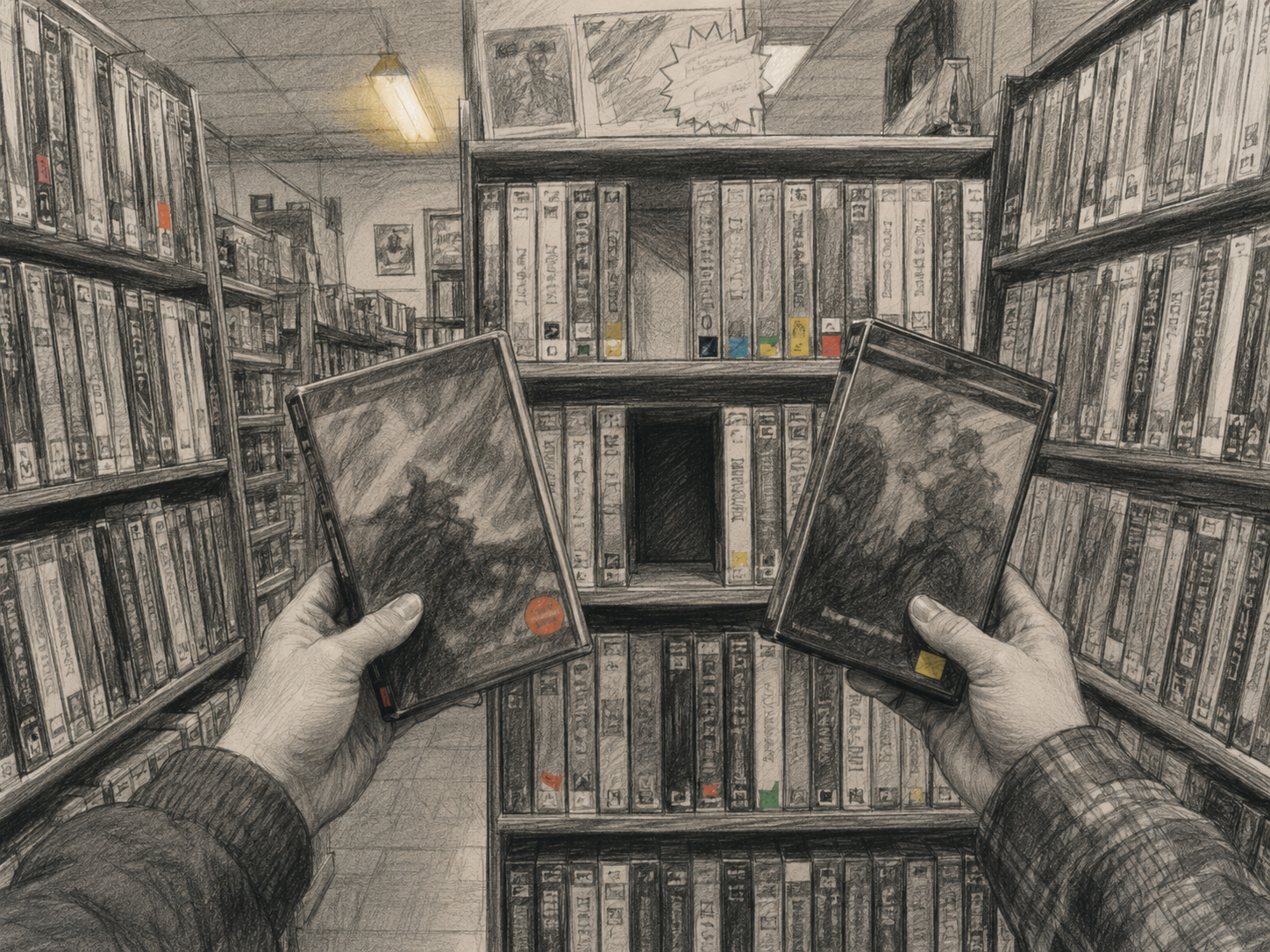
The store wasn't charming; it often wasn't. What mattered is that browsing happened in a room, not inside one person's private hesitation.
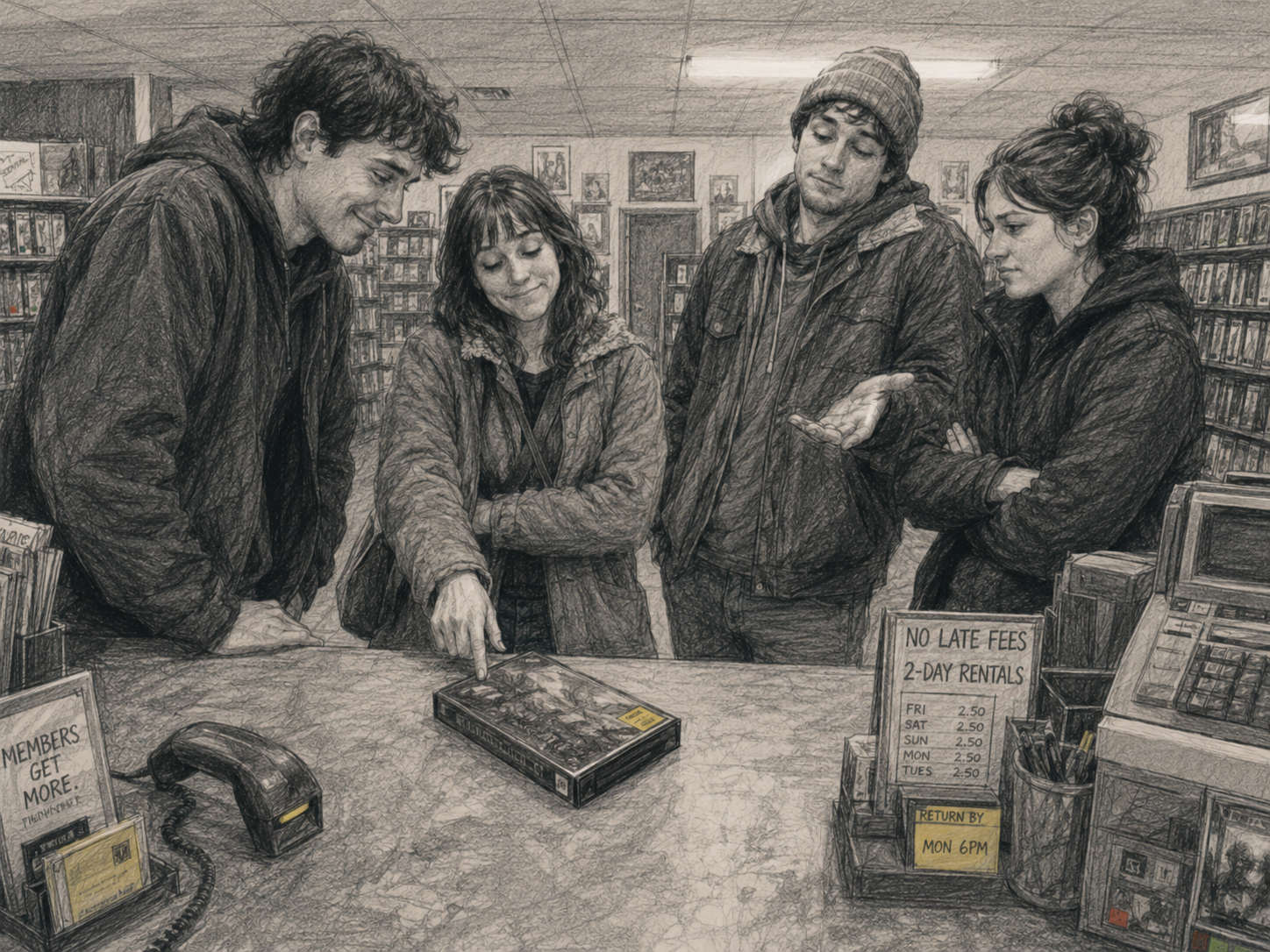
In the video store, you had to choose with other people.
Someone wanted comedy. Someone else wanted action. Someone had already seen that one. Someone picked up a box because the cover looked interesting. Someone else read the back and made a face. The debate wasn't noble. It was just ordinary people trying to turn different moods into one plan.
Sometimes it took too long. Sometimes the loudest person won. Sometimes the loudest person was wrong and everyone discovered that together two hours later.
But the debate made the movie social before the movie began, in a way the menu rarely does.
By the time you got to checkout, the choice already had a small history. Just enough to make it more than content. It was the movie you ended up with after the first one was gone. The one someone argued for. The one everyone finally stopped resisting.
Then came the stranger part: once the movie was home, you usually watched it.
Not because it was perfect.
Because that was the movie.
The movie had stopped being one possibility among thousands and become the plan for the night. You had the tape or the disc, the people, the night. At some point, browsing ended and watching began.
Streaming makes it easy to keep searching instead of watching.
You can start something and leave five minutes later. You can check your phone. You can switch to a show. The cost of changing your mind is close to zero. In practical terms, it's wonderful. Why sit through something you don't like when the entire archive is right there?
Still, maybe there was something useful in the old point of no return.
You watch a movie differently when you have to live with it for the night instead of replacing it the second it becomes mildly inconvenient. You give the slow scene a little more room, wait out the awkward first act, and stop asking whether this is the best possible movie. You just deal with the movie in front of you.
I don't want to claim that streaming erased memory. That would be silly. Families still have movie nights. Friends still text each other about shows. People still fall in love with stories they found on a platform at midnight. New rituals can form inside abundance, and some of them are probably better than the old ones.
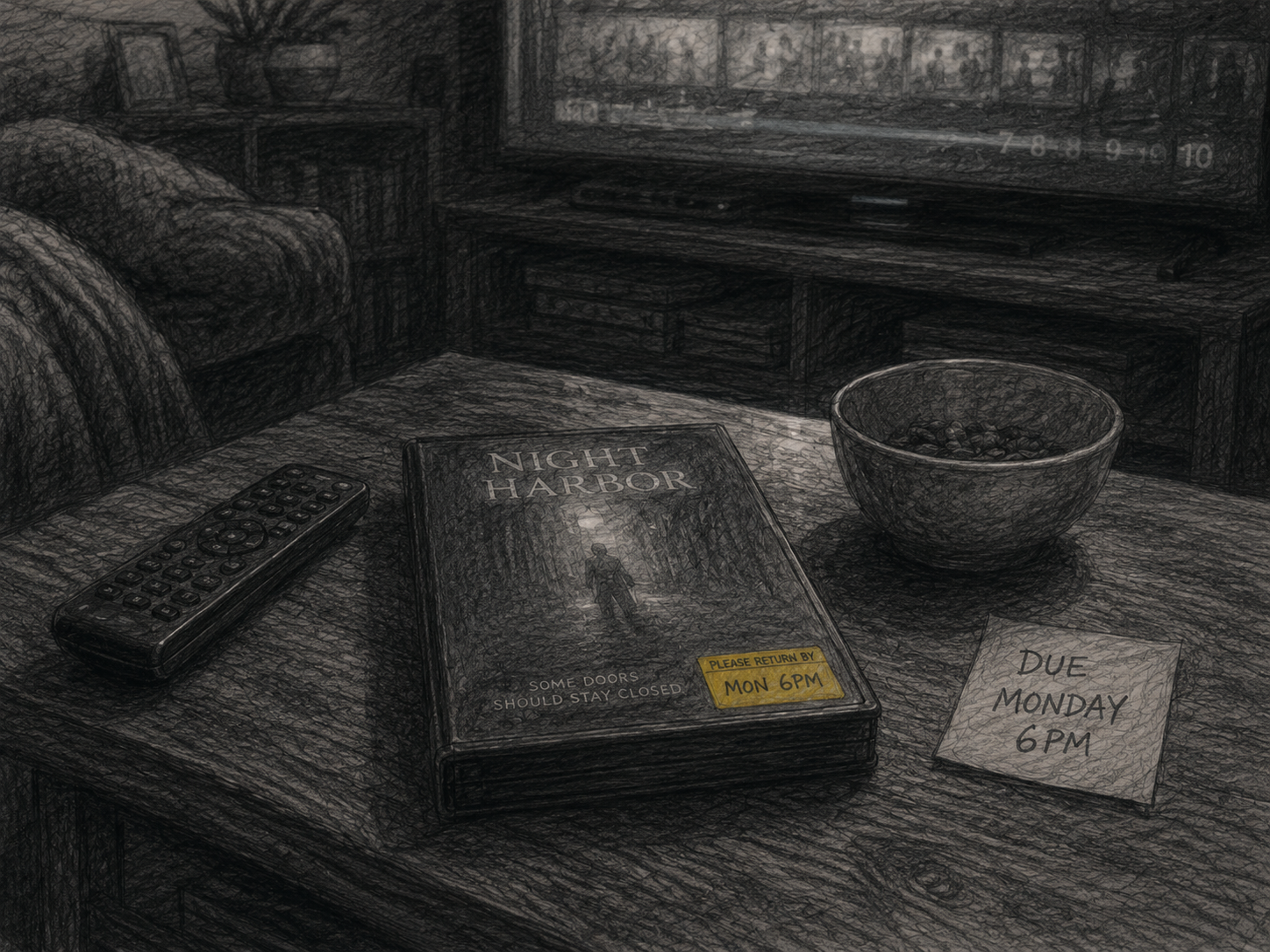
Looking back, the night had a structure that was hard to see from inside it: a trip, a shelf, a debate, a due date.
Maybe the old Friday night worked because the search had to end.
That may be part of why some old choices stick in memory.
They had a before and an after.
We tend to notice the friction that irritates us before we notice the friction that turns a choice into an event, especially when both are wrapped inside the same experience.
But abundance tends to remove several things at once, not just the thing you wanted gone.
Streaming removed the late fees and the drive and the limited inventory. It also removed the moment when the search had to stop and the watching had to begin.
Some of those were annoyances.
Some helped end the search and commit you to a movie.
At some point the browsing stopped, not because you found the perfect movie but because you had to leave.
That small, ordinary pressure is what made the choice stick.
The question is not whether Netflix is better. It is better. The question is what else disappeared when the friction did.