The Summary Trap
You paste the link into the box and ask for the key takeaways.
It might be a 4,000-word essay, a 40-minute YouTube video, or a three-hour podcast. You're a grown person with tabs, laundry in some stage of betrayal, and a calendar that keeps reproducing.
Somewhere along the way, it started to feel responsible to get the summary first, then decide whether to spend time with the thing itself.
The request shows up in a few familiar forms: What is the TL;DR? Give me the key points. Tell me whether this is worth my time.
There's something funny about that, because the answer is sometimes: yes, this was worth your time. The point of the essay may be that you needed to read the essay. The point of the interview may be the way someone took forty minutes to circle the thing they couldn't quite say directly. The point of the lecture may be the explanation you were trying to skip.

Before this turns into a sermon, though: summaries are incredibly useful.
Life is short. Not every meeting recording deserves to be watched. Not every long report deserves a careful reading.
A good summary can be a triage tool, a memory aid, and a humane response to the fact that modern life produces more information than any person can responsibly absorb. It removes obstacles: inaccessible language, unnecessary time cost, or a meeting that should've been an email and then somehow became a recording.
If you're trying to find the part of a long document that affects your team, summarize it. If you missed a meeting and need the decision, summarize it. If a dense article is hard to access, summarize it first.
It's a map.
The trap begins when the map becomes the trip.
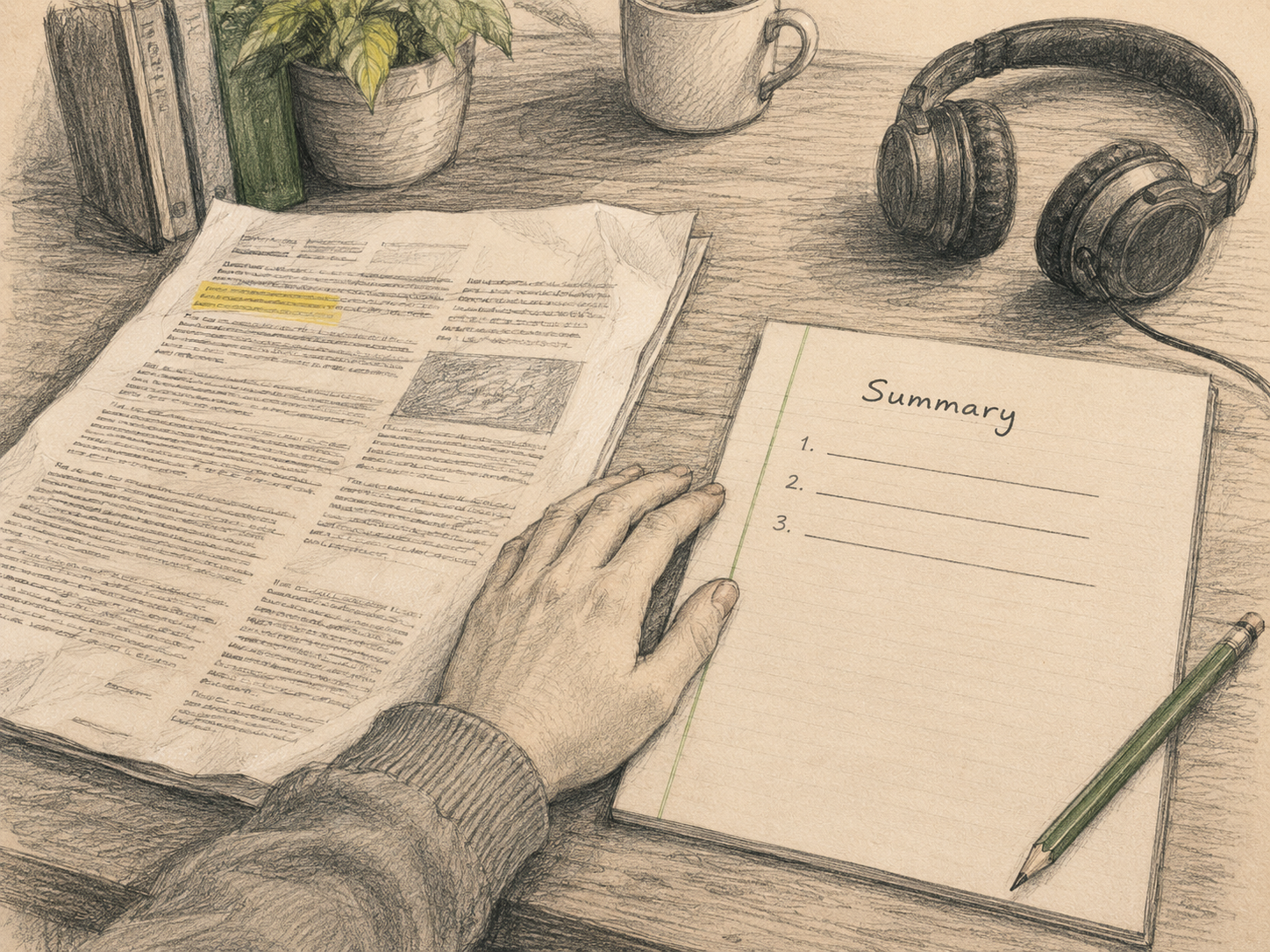
A summary of Harry Potter can tell you that Voldemort loses. That's a useful fact if you're playing a strange trivia game or trying to understand a cultural reference without reading seven books. But nobody who loved those books loved them because they acquired the information that Voldemort eventually loses.
The story was the waiting. The attachment to people who didn't arrive as bullet points. The weird experience of caring about a made-up sport with an absurd scoring system because the books made you live there long enough for it to matter.
Knowing what happens is not the same as having the story happen to you.
Most people understand that with novels. A plot summary isn't the book. It may help you remember it or decide whether to read it, but reading a plot summary doesn't create the same experience as reading the book.

The harder version is nonfiction.
We often treat an essay, a book, a lecture, or a serious argument as if it were just a container for claims. Claims in a trench coat.
The same mistake appears at work. The Slack thread becomes: the team decided to move forward. The customer interview arrives as "price concern."
The customer did mention price. They also talked for six minutes about trust, embarrassment, and the one competitor they refuse to name. The summary found the noun. The person who listened may have heard the problem.
Strip away the anecdote, the objection halfway through, the repeated phrase that seemed unnecessary until it came back later, and what remains must be the point.
But the better nonfiction is rarely just a collection of conclusions.
The examples aren't decoration. The order isn't arbitrary, and the delay is sometimes the method.
A writer may repeat an idea three times because each pass does a different job. The first introduces it. The second explains it. By the third, you understand why it matters.
A lecture may need the failed first explanation because that's where your own confusion gets named. An interview may matter less for the stated answer than for the pause before it or the contradiction after it.
Compression can help you finish something without understanding why it mattered.

The feeling of having learned can arrive before the learning has done its work.
A good summary creates recognition. You see the shape of the argument and know the main terms. If someone asks what the piece was about, you can answer.
Then someone asks you to explain the argument. Why did the author think that? What was the example? What would change your mind?
Suddenly you realize that you recognized the argument without understanding how its pieces fit together.
A lot of learning comes from trying to pull the idea back out of your own head: saying it badly, noticing the gap, and discovering that the part you skipped was necessary to understand the idea.
Practice testing and spaced practice build more durable retention than reviewing material.
Retrieval matters. So does generation: the work of producing an answer, an explanation, or a summary yourself, instead of only recognizing one that's been handed to you.
The question is not just whether something got summarized. It is who did the summarizing.
That doesn't mean all difficulty is good. Plenty of difficulty is just bad design, bad access, or needless pain pretending to be rigor.
But an easier process can feel like learning because it removes the discomfort that would've shown you what you didn't yet know.
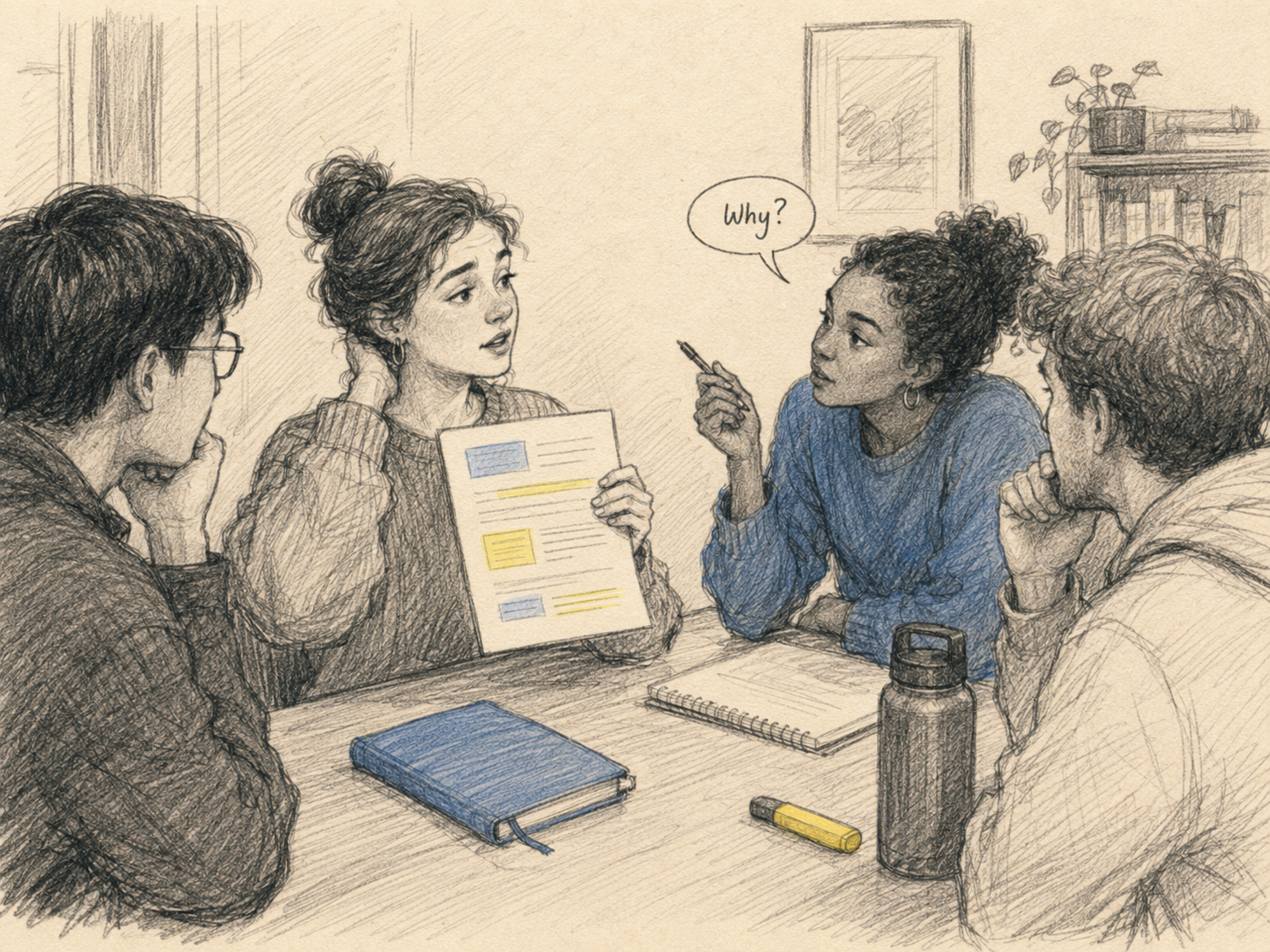
One 2025 PNAS Nexus paper ran seven experiments with 10,400 participants. In that setting, people who learned from LLM-generated summaries gave advice that was shorter, less fact-rich, less original, and less likely to be adopted than advice from people who used web search.
When the tool does the compression for you, you may receive the output while skipping the work of deciding what mattered. You can recognize the material without understanding how its ideas fit together.
Note-taking research also distinguishes capturing words from processing them. Capturing words verbatim can be useful. The learning often happens in the sorting, questioning, and reformulating.
Playback speed raises the same question about comprehension, and the evidence there is more nuanced than the usual panic allows. Watching a simple lecture at 1.5x or even 2x may be fine in some controlled contexts. A compliance update and a timing-dependent joke do not depend on pacing in the same way. Some things survive compression better than others.
Summaries make compression abundant.
Key takeaways used to require a person to read, listen, retrieve, and decide what mattered. Now the compression can appear instantly.
Paying attention meant taking things in order and keeping earlier details in mind. It required retrieval, not just recognition.
Sometimes that effort helped build understanding.

The better question is not "Should I summarize this?"
The better question is: what kind of thing am I asking to be summarized?
Is this something I need to know about, or something I need to go through?
The next time you paste a link into a box and ask for the point, just notice when the thing you're trying to skip is the part that might have changed your mind.