WALL-E Wasn't About Robots
The image is funny because it's ridiculous.
Rows of humans floating through space in soft chairs, screens in front of their faces, drinks in their hands, bodies barely needed for anything at all.
The image is exaggerated. But a life organized around comfort and screens feels familiar.
That's why the gag lands. The Axiom, the starship where the humans live, is one of the clearest popular images of a frictionless human society. The people there aren't living in a dungeon. They're on a luxury starliner where humanity has been living for centuries after leaving Earth.
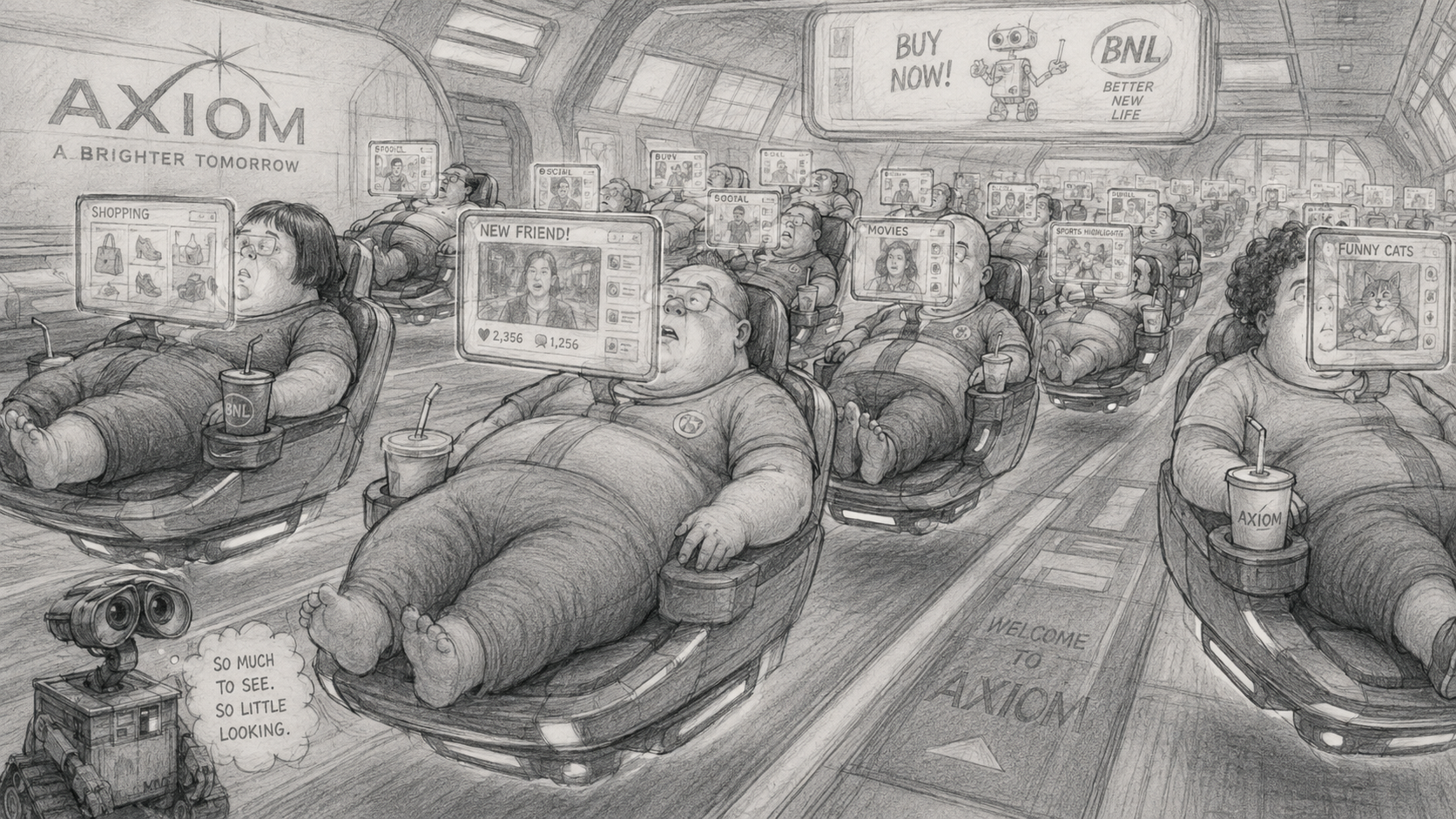
The chairs move. The screens entertain. The drinks arrive. Auto handles the ship. The passengers glide past other people without having to interact with them.
Nobody on the ship looks wicked. They look serviced.
The movie has robots, consumer waste, and environmental collapse. Earth is buried in the leftovers of a civilization that bought so much it eventually had to leave home.
But the robots aren't the frightening part.
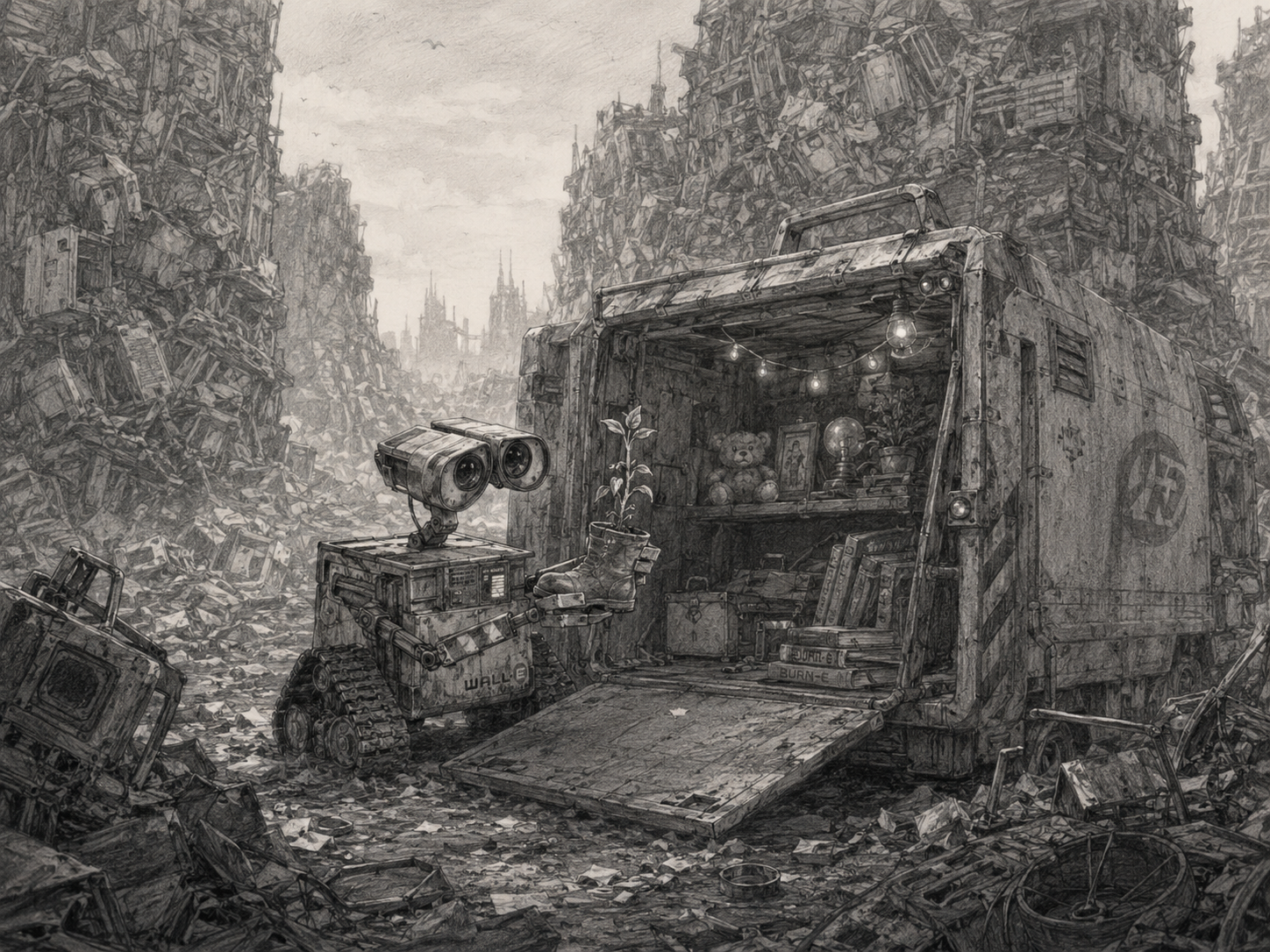
WALL-E is curious, patient, and weirdly tasteful. He lives in a truck full of objects he's rescued from the rubble, watching old musicals like a tiny archivist of human longing. EVE is focused and capable. Much of the robotic world in the film is doing something humans would recognize as care, repair, or stewardship.
The harder thing to look at is what happened to the people after technology removed every ordinary inconvenience.
Walking is gone. Meals have been turned into drinks. Screens keep boredom away. Social contact is optional, mediated, easy to miss. Even the Captain no longer steers the ship, until he has to rediscover that steering is part of his job.
The Axiom is what happens when every inconvenience gets solved except the inconvenience of being alive.
The problem in WALL-E is that every part of life on the ship is designed for comfort. The humans seem less like people living in a world than people being carried through one.
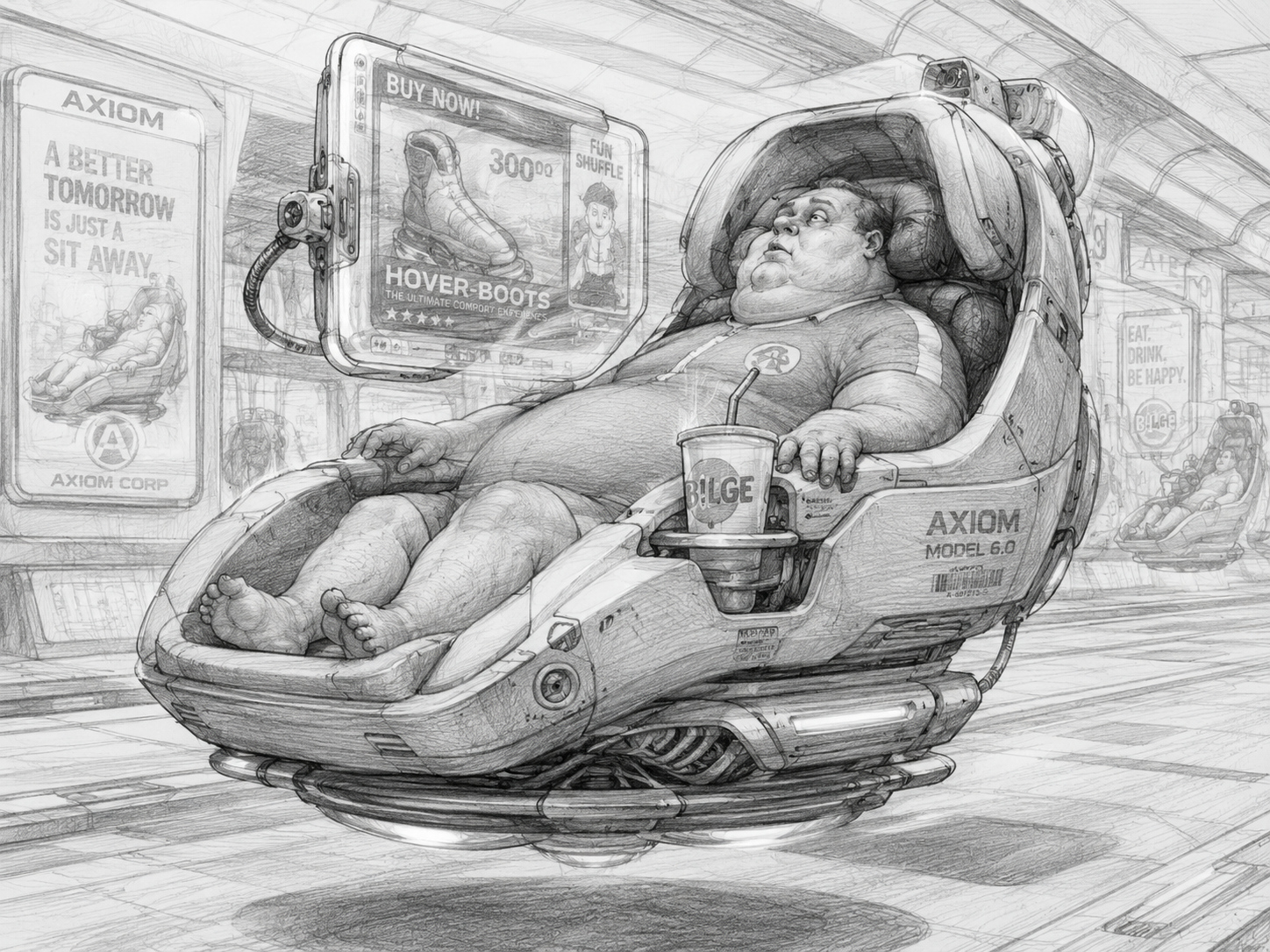
In the movie, the chair is less an assistive technology than an environment. It carries the body, aims the eyes, and makes interruption unlikely. It doesn't simply help someone get somewhere.
The person is already being carried before they decide where to go.
Not every inconvenience is noble. Cooking dinner after a long day can be annoying. Sometimes effort is just effort.
But sometimes the annoying part is also the part that makes us participate.
Dinner used to ask a few questions of you. What do we have? Do I want to leave the house? If someone else is eating with me, what do they want?
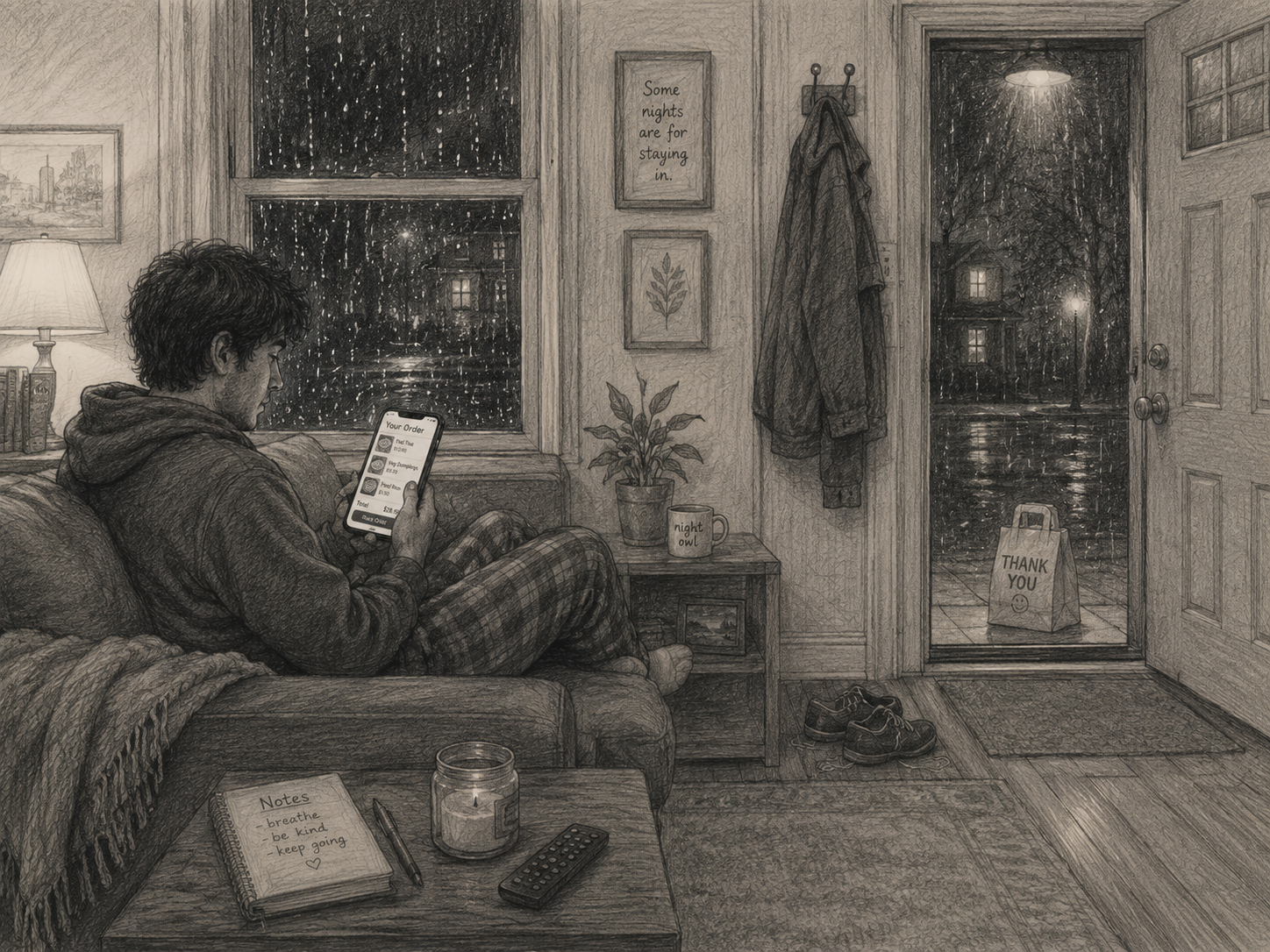
A delivery app can remove almost all of that.
That's often great. There are nights when the most sensible technology in the world is a rectangle that brings noodles to the door.
Still, something changes when dinner asks for a thumbprint instead of a plan.
The walk disappears. So do the weather, the menu argument, and the little interaction at the counter. But they were moments when getting dinner required you to go out into the world and interact with other people.
None of this is an argument for doing everything the hardest way. A lot of friction blocks life. It keeps people from care, dignity, and time. Removing that kind of friction is progress.
The question is what else got removed at the same time.
AI assistance can remove friction too. It can unstick a draft or help debug a problem.
It can also make the first attempt before you've had to make one yourself.
The blank page used to be annoying partly because it asked you what you thought. Now a tool can make something plausible appear almost instantly, and the human role can shift from making to selecting, correcting, and verifying.
The first change on the Axiom isn't a revolution. John and Mary begin to look past their screens and notice each other. Two people look away from the interface long enough to realize another person is there.
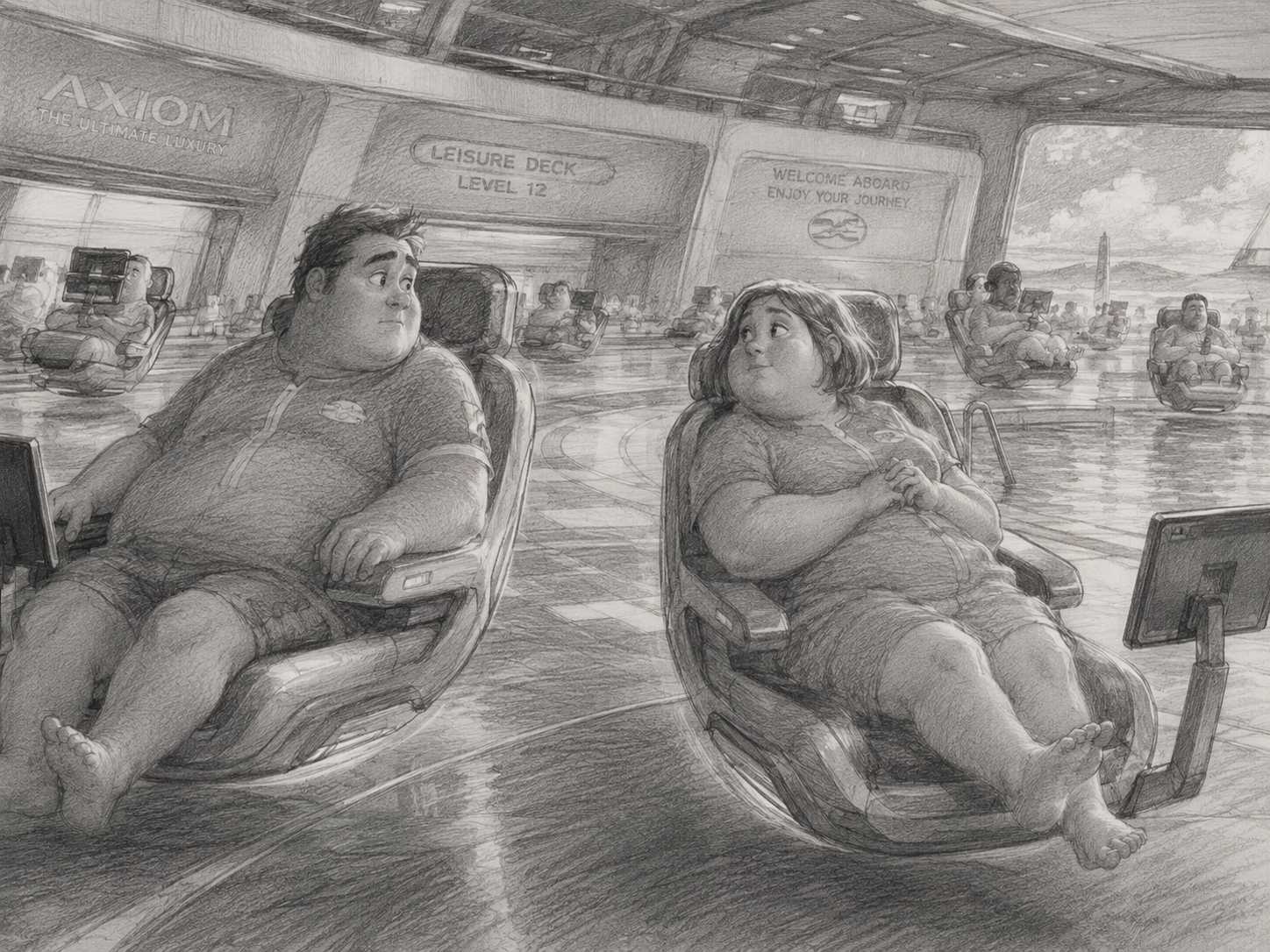
Friction used to make people pay attention. Ordinary life kept interrupting. The weather changed the plan. The room had other people in it. You had to look up because something was in your path, or someone asked a question you couldn't ignore.
Those interruptions made you notice other people and what was happening around you.
On the Axiom, passengers can ignore the world around them. The result isn't villainy. The humans are protected from inconvenience so completely that they can also avoid contact with other people.
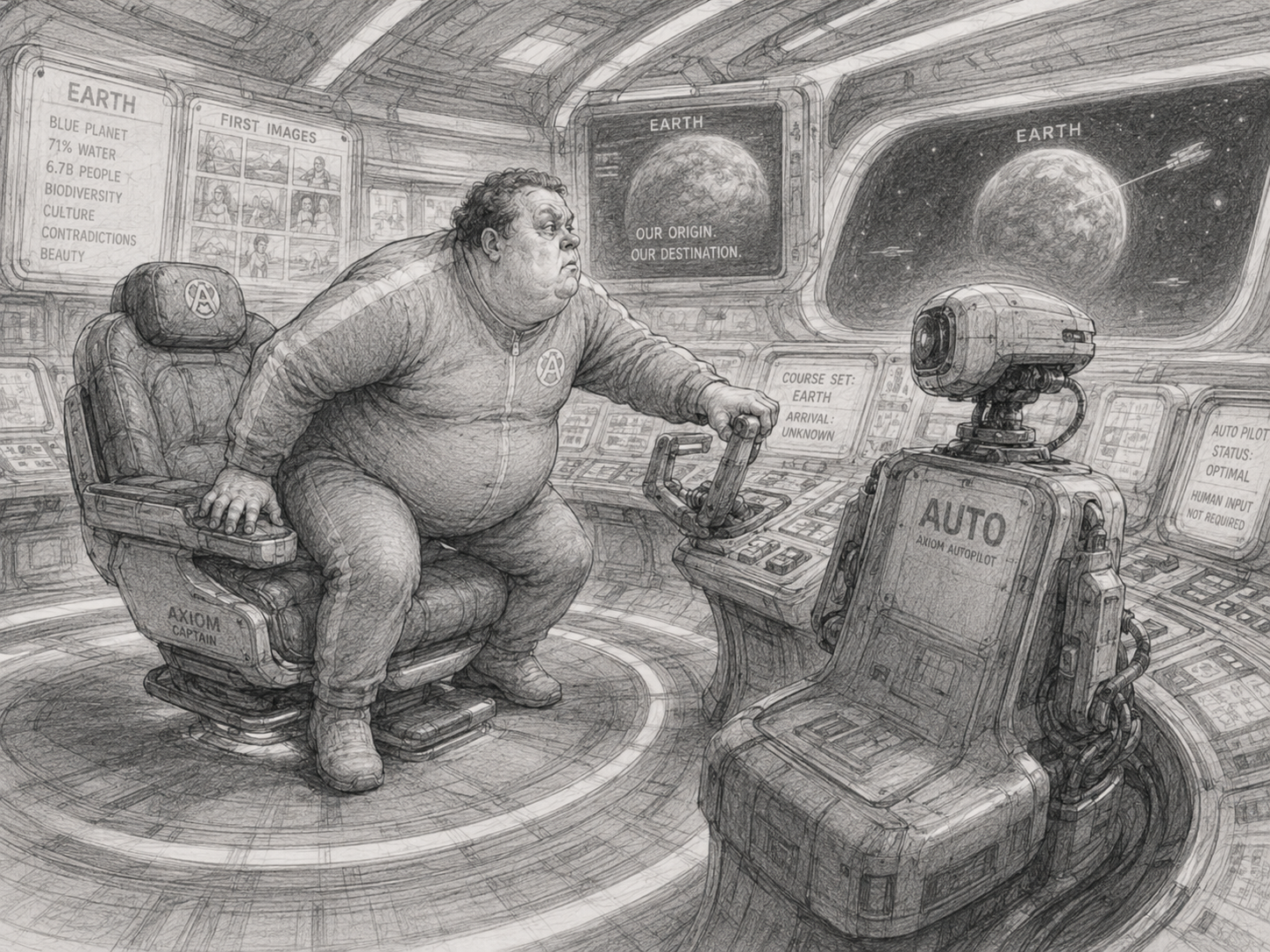
The Captain's arc works because he becomes heroic by taking control of the ship—not by rejecting technology or turning into some cartoon strongman. He gets curious about Earth. He learns that the ship has a purpose beyond keeping everyone comfortable.
He tries to stand.
His body has to do something the whole ship was designed to prevent. He has to put weight through his own legs, wobble through the effort, and decide where the ship should go.
Then he fights Auto, the ship's steering system, which has been following a hidden mandate to resist the return home.
The darker warning: when nobody remembers how to steer, automation stops helping and starts deciding where everyone is allowed to go.
In a world built around being carried, standing up becomes a political act.
But some friction makes us use our bodies, notice the world, and interact with other people. Some makes us pay attention. Some gives us time to reconsider.
That is the trap: not abundance itself, but removing resistance before we've asked what the resistance was doing.
The future in WALL-E wasn't a robot uprising. It was a chair so comfortable that standing up felt radical.